Most property owners only think about fire safety twice: when they move in and when something goes wrong. That gap in the middle is where fire and safety inspections do their actual work. Quietly. Annually. Without fanfare. And yet, skipping them is one of the more costly decisions a property owner can make in Australia.
Let’s be direct about what an inspection is. It is not a formality.
Under the Environmental Planning and Assessment Act 1979 and the Building Code of Australia, most commercial, residential, and public-use properties must maintain current fire compliance documentation. A missed inspection does not just leave you exposed to risk. It can void insurance claims, result in council enforcement action, and, in worst-case scenarios, carry personal liability if a fire incident occurs.
That is not a scare tactic. It is the legal reality for property owners across New South Wales.
What a Fire and Safety Inspection Actually Covers
People sometimes imagine an inspection as someone waving a checklist near a smoke alarm. The real scope is wider than that.
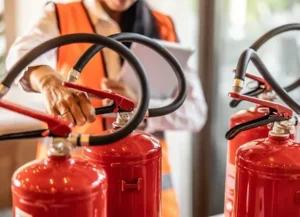
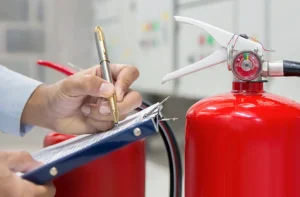
A thorough fire and safety inspection covers the detection system, suppression equipment, evacuation infrastructure, and the compliance documentation that ties it all together. Here is what that typically means in practice:
- Smoke alarm functionality, placement, and battery condition
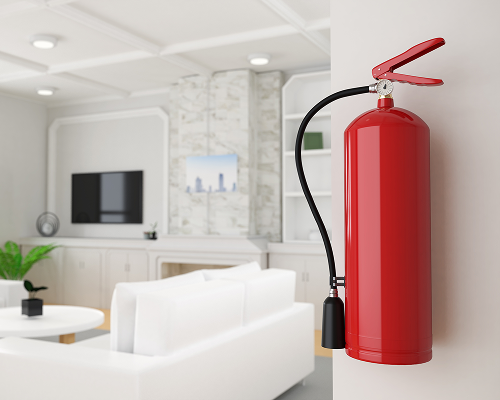
- Fire extinguisher pressure, physical condition, and service tags
- Fire hose reels and hydrant systems for operational readiness
- Emergency exit lighting and evacuation signage
- Sprinkler systems where installed, checking coverage and pressure
- Electrical safety switches (RCDs), manually tripped and verified
- Overall compliance against current Australian Standards (AS 1851, AS 1670, and related codes)
Each of these components has a failure mode. Sprinklers get blocked by shelving. Exit lights lose battery backup without anyone noticing. Extinguisher pressure bleeds off slowly over the years. None of these announce themselves until the moment they matter most.
The inspection finds them first.
The Property Types Most at Risk From Deferred Inspections
- Residential and rental properties
Landlords in NSW carry specific legal obligations under the Residential Tenancies Act 2010 regarding smoke alarms. Since 2023, interconnected photoelectric alarms have been mandatory in most new tenancies, with rolling compliance requirements on renewals. A landlord who cannot produce a current compliance certificate at change of tenancy is exposed both to penalty notices and potential liability.
Tenants often assume landlords handle this. Landlords sometimes assume their managing agent handles this. The result is that nobody handles it.
- Aged care and healthcare facilities
This is the property category where deferred inspections carry the most serious human consequences. Residents in aged care facilities often have limited mobility. Evacuation times are longer. The margin for error in fire system performance is smaller. A failed alarm or blocked exit in a residential aged care facility is not a compliance failure. It is a life-safety failure.
The 2009 Quakers Hill nursing home fire, which killed eleven people, renewed attention across the sector on evacuation procedures and system maintenance. Good intentions are not a substitute for documented, inspected, working systems.
- Commercial and industrial buildings
Office buildings, warehouses, and retail spaces generate large volumes of foot traffic and store materials that can accelerate fire spread. Warehouses in particular often modify racking layouts after initial fit-out, which can compromise sprinkler coverage zones without anyone flagging the change.
Regular fire and safety inspection catches these configuration changes before they become hazards.
Why Compliance Certificates Matter More Than Most People Realise
An Annual Fire Safety Statement (AFSS) is not just paperwork for the council. It is a documented assertion that a qualified fire safety practitioner has inspected the nominated fire safety measures and found them compliant. It gets submitted to the council and posted at the premises.
If a fire occurs at a property without a current AFSS:
- Insurance companies will scrutinise the lapse closely when assessing claims
- Local councils in NSW can issue penalty notices of up to $110,000 for corporations under the Environmental Planning and Assessment Act
- If negligence is established, personal liability can follow
The cost of a professional inspection is a few hundred dollars per visit for most mid-size commercial properties. The cost of non-compliance is orders of magnitude higher. There is no version of this where skipping the inspection makes financial sense.
Finding the Right Provider Matters
Not all fire safety companies operate at the same standard. When evaluating fire safety inspection companies nearby, look for:
- Current FPAS (Fire Protection Accreditation Scheme) or equivalent licensing
- Experience across your specific property type
- Clear documentation and digital audit trails, not just paper checklists
- Willingness to provide defect reports with rectification quotes, rather than passing compliance without flagging marginal items
- Transparency on what is and is not included in the service scope
The cheapest quote and the most thorough inspection rarely come from the same company. In a compliance-driven industry where the consequences of failure fall on the property owner, the inspector’s methodology matters as much as their price.
What Good Fire Safety Maintenance in Sydney Looks Like
Maintenance is the other half of the equation that inspections alone cannot deliver. A fire system inspected once a year but never maintained between visits is still a liability.
Good ongoing maintenance means:
- Battery replacements on a defined annual schedule, not when alarms start chirping at 3 am
- Extinguisher service records kept current and accessible
- Hydrant and hose reel operability confirmed after any building works nearby
- Prompt defect rectification rather than letting reported faults sit for months
The inspection identifies the problem. Maintenance resolves it. Both are required for genuine compliance.
One thing worth noting about how Australian property owners tend to approach this: most treat fire safety as a reactive line item. Something gets flagged during a routine inspection, and they fix it. What few do is schedule a mid-year walk-through between formal inspections. That gap is where small issues compound. A blocked evacuation path. A fire door propped open with a wedge that has been there for six months. An alarm with a low-battery fault that nobody reported.
Proactive maintenance does not require a large budget. It requires someone with accountability to check the system periodically.
The Broader Point Most Property Owners Miss
There is something worth saying about how fire safety gets framed in commercial decision-making. It sits in the “compliance cost” column of a budget, next to insurance premiums and council rates. It gets managed to the minimum required threshold.
That framing is understandable. It is also wrong.
A property where fire systems actually work is a different kind of asset. Insurance underwriters know this. Commercial tenants with strong ESG requirements know this. Aged care operators and hospital facility managers know this. The fire and safety inspection is not a tax. It is the evidence that your property is what you say it is.
Properties that treat fire compliance as a genuine operational discipline spend less on emergency rectifications, retain tenants longer, and process insurance claims more cleanly. It compounds.
Priority Fire Systems provides fire and safety inspection, maintenance, and certification services across Sydney, covering residential, commercial, aged care, hospitality, and industrial properties. For properties requiring an Annual Fire Safety Statement or routine compliance review, contact the team.